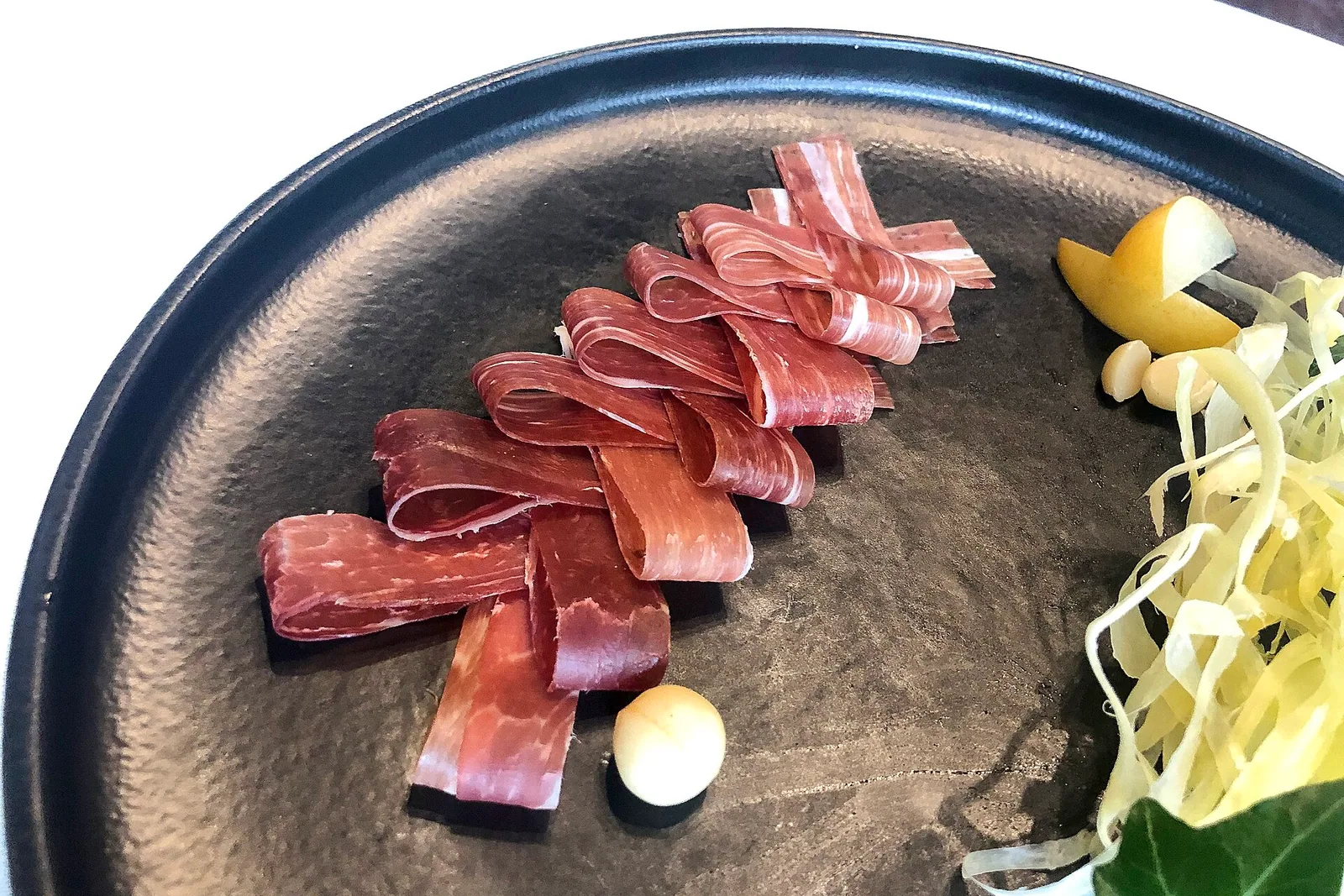
Rushan is made by stretching and drying cow's milk into thin sheets, a technique that likely arrived along the trade routes from Central Asia. In Dali, it is sold at markets and eaten as a snack: grilled over charcoal, brushed with rose jam, or fried and sprinkled with sugar. It is chewy, faintly sour, and unlike most Chinese dairy products.
Flavor
Mild, slightly sour, chewy; sweet when grilled with rose jam
Where
Dali and Xizhou markets
Price
CNY 5–15 per piece
How it is made and eaten
Milk is heated, acidified, and stretched into thin sheets, which are dried on racks. The result is a firm, leathery sheet that softens when grilled. At markets, vendors grill it over charcoal and fold it around rose jam or sugar. It can also be fried until crisp and served as a savory snack.
The texture takes getting used to. It is not like Western cheese; it is closer to a chewy dried dairy product. Try a small piece first. The rose jam version is the most approachable for most visitors.
- Grilled with rose jam is the classic market snack
- Fried versions are crisp and savory
- Buy from a busy stall for freshness
Where to try it
Xizhou's morning market is the best place to see it made and sold. Dali's old town has vendors, but prices are higher. In Kunming, some Yunnan restaurants serve it as an appetizer. Ask whether it is cow's milk or a blend; traditional rushan is cow's milk.
It is not a vegetarian-safe dish by default; some versions use rennet or animal-derived enzymes. If that matters to you, ask before eating.
More from the table