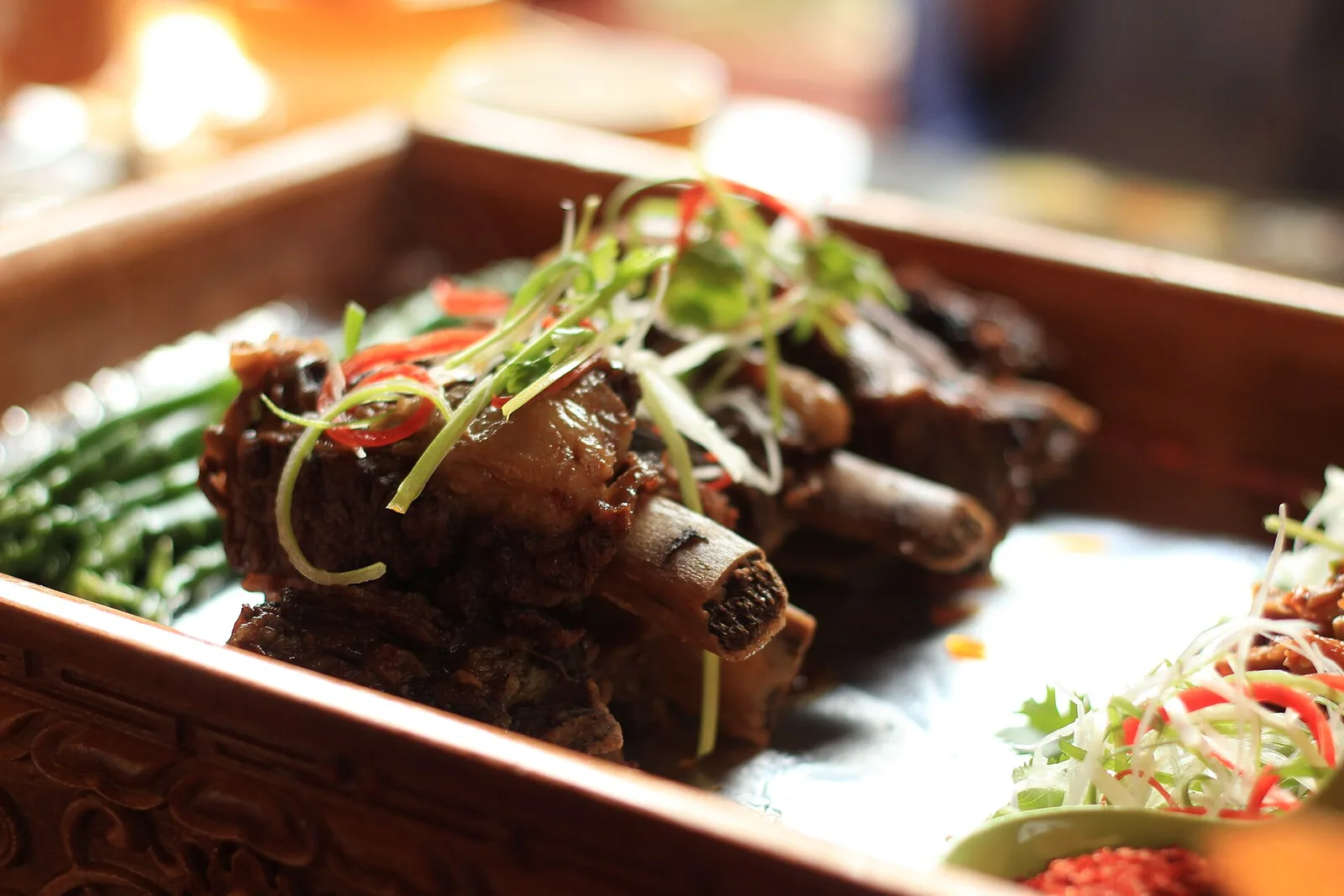
In Shangri-La and the Tibetan highlands, yak is the staple meat. A hotpot is the most social way to eat it: thinly sliced yak, wild mushrooms, tofu, greens, and sometimes barley products, cooked in a savory broth. The meat is leaner and stronger-tasting than beef, and the meal is designed to warm you up after a cold day.
Flavor
Rich, gamey, savory; herbal dipping sauces
Where
Shangri-La and Tibetan areas of northwest Yunnan
Price
CNY 100–200 per person
How to eat it
The broth is usually beef or yak based, sometimes with medicinal herbs. Add vegetables and mushrooms first, then dip the thin slices of yak for a few seconds. Overcooking makes the meat tough. Dipping sauces are sesame, chilli, garlic, and coriander; mix to taste.
Yak meat is lean, so do not expect the marbling of beef. The flavor is stronger and slightly grassy. If you are unsure, start with a small portion and add more. The broth becomes richer as you eat; save some for noodles at the end.
- Dip thin slices briefly; do not boil them
- Add vegetables early for flavor
- Finish with noodles or rice in the broth
Altitude and appetite
At 3,000 metres and above, appetite can be reduced and digestion slower. Eat slowly and do not overload on meat on your first night. Alcohol hits harder at altitude; keep it minimal until you have acclimatised.
Vegetarian options are limited in traditional yak hotpot restaurants. Ask for a mushroom and vegetable broth, and confirm that no meat is added. In larger towns, there may be a vegetarian hotpot option, but it is not the norm.
More from the table