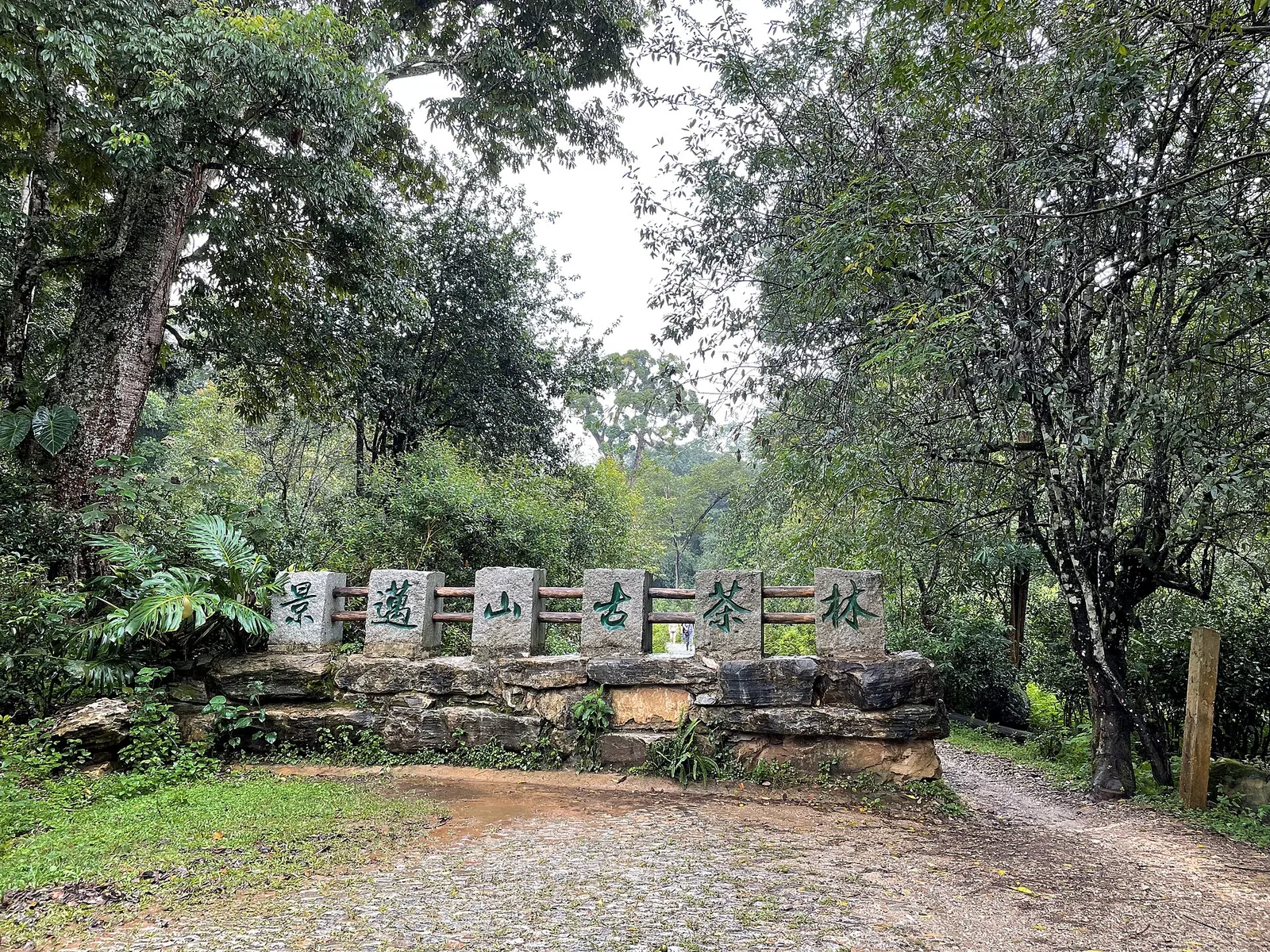
Yunnan is the origin of some of the world's oldest tea trees and, more recently, a serious coffee region. This route is not about tasting rooms with polished branding. It is about the landscapes where the crops grow, the villages that process them, and the markets where they are sold. It is slower and less scenic than the mountain routes, but it has a different kind of depth.
Elevation profile
The climb, in sequence
1,000–2,100 m
Heights are approximate town or site elevations, not trail summits.
Waypoints
Kunming
Coffee roasters, tea shops, market breakfast.
Kunming → Pu'er
Train or road south; afternoon tea market.
Pu'er tea mountains
Old tea forests, village processing, tasting.
Pu'er → Jingmai
Mountain roads, Dai and Blang villages, tea terraces.
Jingmai
Morning market, forest walk, family tea workshop.
Jingmai → Pu'er → Kunming
Slow return; last tasting; evening train or flight.
Why Yunnan tastes like this
Pu'er tea is named after the old trading town, but the trees grow across a wide area of southern Yunnan. Old-growth tea forests, where trees are allowed to grow large rather than being kept as bushes, produce the leaves that command high prices. The processing — withering, killing the green, rolling, drying, and sometimes fermentation — is often done in family workshops.
Coffee arrived later, mainly in the late twentieth century, and Yunnan now produces most of China's arabica. The best farms are at altitude, where slower ripening develops flavour. In Kunming and Pu'er you can find roasters who treat Yunnan coffee as a origin worth discussing, not just a commodity.
How to travel it responsibly
Arrange visits through reputable shops or guesthouses rather than turning up at a farm. Buy tea and coffee directly where you can, and ask about harvest dates and processing. Prices vary enormously; a tasting should include an explanation, not just a sales pitch.
The roads into the tea mountains are narrow and slow. A local driver is essential. Do not schedule a tight connection after a mountain day. The best experiences are unplanned: a family drying tea on bamboo mats, a market stall with leaves from a village you have never heard of.
The honest trade-off
This is not the Yunnan of postcards. The tea mountains are working agricultural landscapes, and the towns are ordinary. If you want dramatic scenery every day, combine this route with the northwest. If you want to understand a product from the ground up, it is one of the most rewarding trips in the province.
Tea and coffee tourism can be a performance. Ask questions, taste critically, and do not buy more than you can carry. The point is the landscape and the people, not the souvenir.
Practical notes
- Trains and buses connect Kunming with Pu'er; the tea mountains require a car and driver.
- Visit during the dry season, when mountain roads are more reliable.
- Bring cash for farm purchases and small village shops.
Best for
Places on this route
Other journeys