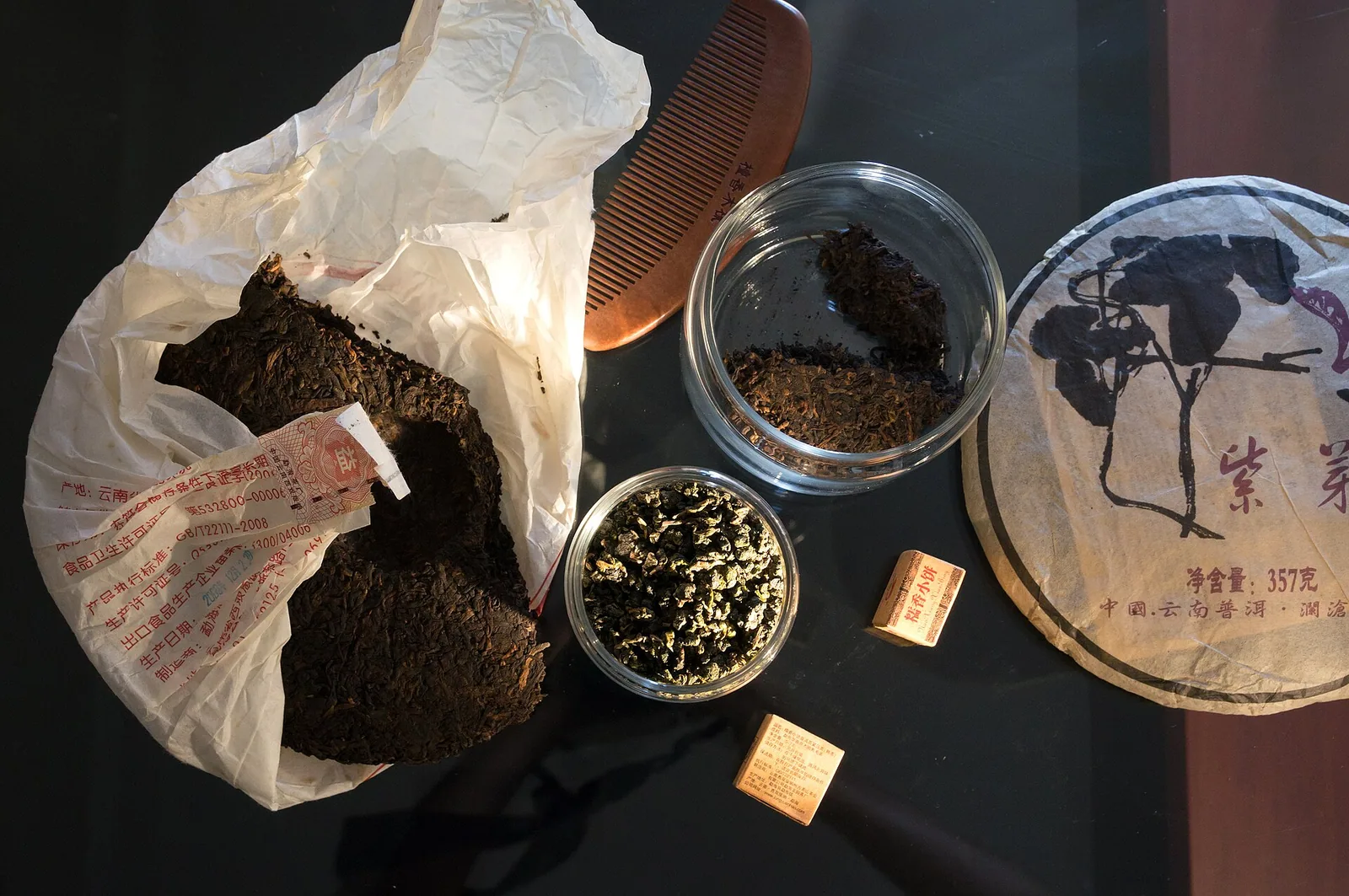
Pu'er is one of the few teas that changes after it is made. That fact is the source of its prestige, its confusing market, and most of the nonsense written about it. This note is not a buying guide. It is an attempt to explain what happens to the leaf between the tree and the cup, so that a tasting in a village teahouse means something more than a polite nod.
Sheng and shou are different projects
Sheng (raw) pu'er is picked, withered, briefly cooked, rolled, sun-dried, and then pressed or left loose. It is drinkable young — bright, bitter, floral — and changes slowly with age. Shou (ripe) pu'er goes through an accelerated fermentation process that turns the leaf dark and earthy in weeks rather than years. The two are not the same product at different ages; they are different techniques.
Most visitors are served shou in restaurants because it is dark, smooth, and forgiving. The teas that collectors argue about are usually sheng from specific mountains and old trees. If a seller tells you a tea is 'aged 30 years' without provenance, treat it as a story rather than a fact.
- Sheng: sun-dried, bitter when young, ages slowly
- Shou: wet-piled fermentation, earthy, ready to drink
- Old-tree tea is rare and expensive; most tea comes from managed bushes
What the mountains change
Yunnan's tea country is not one place. The famous mountains — Bulang, Nannuo, Jingmai, Yiwu — have different soils, altitudes, and microclimates, and the teas taste different. A village's tea can also change from year to year with rain and harvest timing. This is why serious buyers talk about year and place, not just 'pu'er'.
Old tea forests, where trees grow large among other forest species, produce leaves with more complexity and lower yields. The price difference is real, but so is the amount of marketing. A small family workshop may produce better tea than a famous brand name. Taste, ask about harvest, and buy what you like rather than what you are told to admire.
How to taste without pretending
Use a gaiwan or a small teapot, short infusions, and boiling water. Smell the wet leaves, not just the liquor. Notice whether the bitterness turns to sweetness, whether the texture coats your mouth, and whether the flavour lasts after you swallow. These are simple observations, not expert secrets.
Do not buy a cake on the first visit. Taste several, ask for the price per gram, and compare. A reasonable shop will let you taste before you commit. If the sales pitch is about investment rather than flavour, walk away.
- Short infusions, boiling water, small vessel
- Compare bitterness, sweetness, texture, and aftertaste
- Ask for harvest year and village before price