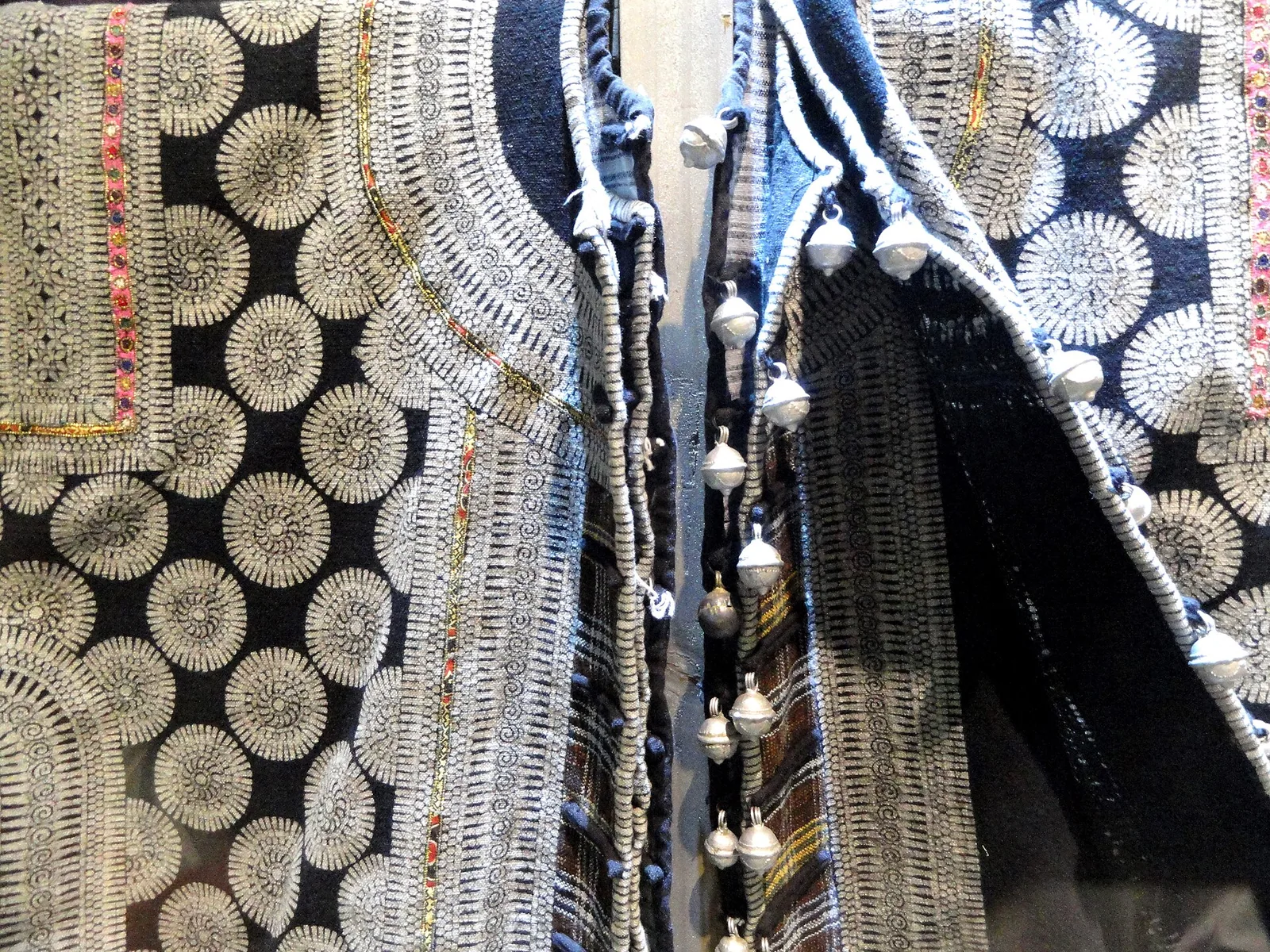
A market stall in Yunnan can look like a wall of pattern: indigo batiks, dense embroidery, silver ornaments, and machine-printed copies of all three. The difference between a textile made by hand in a village and a factory copy is not just quality. It is the knowledge embedded in the pattern, the dye, and the time. This note is about how to see that difference without romanticizing poverty.
Indigo and the chemistry of blue
Many of Yunnan's minority communities use indigo, fermented from local plants and dyed repeatedly to build depth. The smell is sharp, the process is slow, and the result is a blue that changes with wear. Batik — wax-resist dyeing — is used by Miao and other groups to create fine crackle patterns.
Indigo is not a single colour. It ranges from pale sky to near-black depending on the number of dips and the plant. A deep, even indigo cloth can take days or weeks. If a stall sells a large, perfect indigo piece for a very low price, it is almost certainly machine-dyed.
- Look for irregular dye depth, not perfect uniformity
- Ask whether the piece is hand-dyed or printed
- Indigo has a distinctive earthy smell when new
Embroidery as a record
Bai, Yi, Miao, and other communities use embroidery to mark identity, age, and occasion. A sleeve or apron may encode a village's style, a family's history, or a woman's skill. Designs are not random decoration; they are a visual language that outsiders usually cannot read. Ask before you assume.
Machine embroidery is now common in tourist markets, and it can be beautiful. But it is faster and cheaper. A hand-embroidered piece will show slight variation, a visible thread path on the back, and a density that machines struggle to match. Price should reflect the hours, not just the size.
Buying with respect
Buy from the maker where possible. Ask permission before photographing people or their work. Do not haggle a hand-made textile down to machine-made prices; if it is too expensive, say thank you and move on. A fair price is part of keeping the craft alive.
Be wary of antiques. Genuine old textiles are rare, and export rules may apply. A new piece made by a village cooperative is often a better souvenir and a more honest transaction. The same goes for silver: ask about the metal content and whether the piece is traditional or made for tourists.