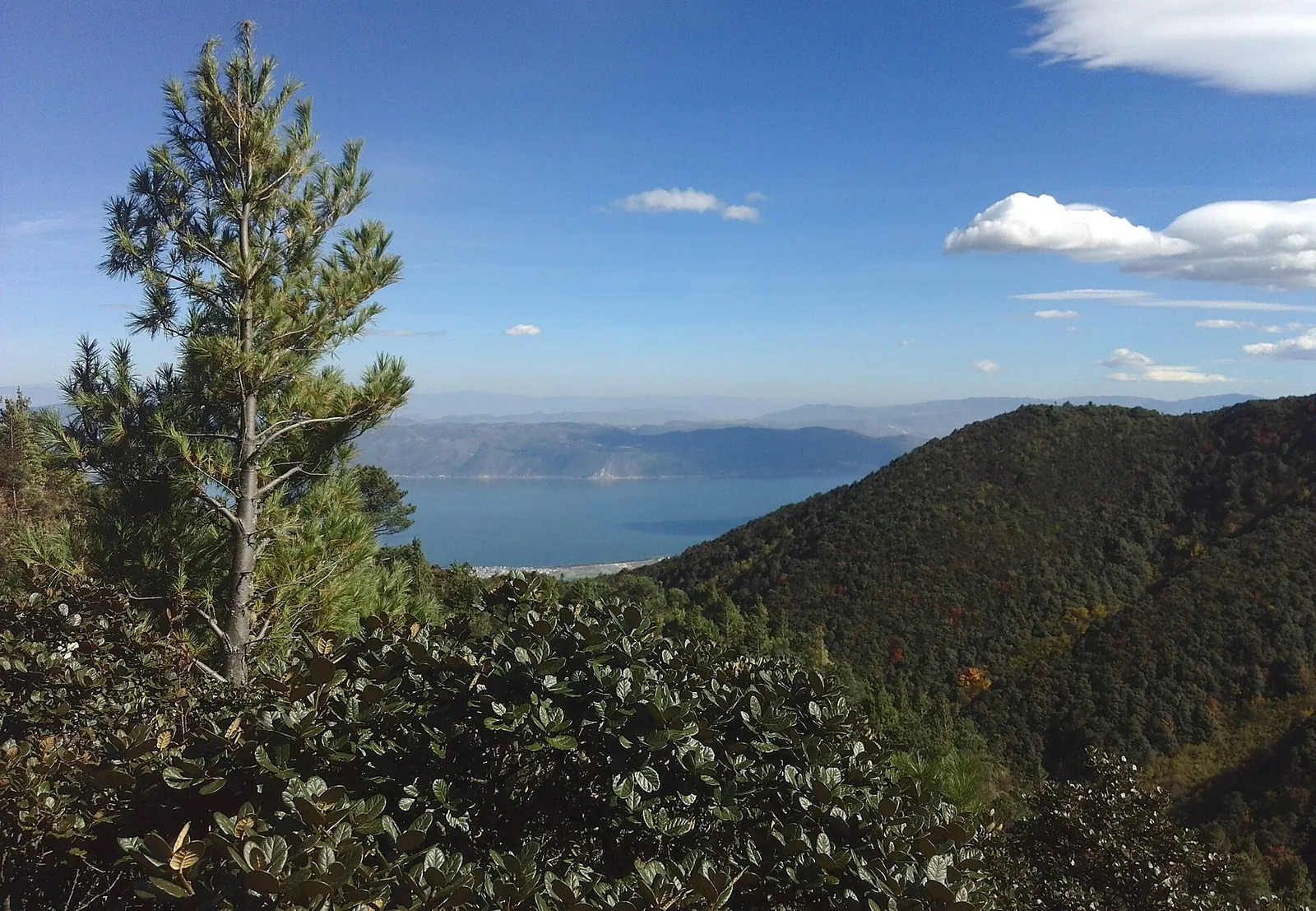
Dali has a reputation problem: it is marketed as a laid-back backpacker haven, which is only half true. The old town is busy, commercial, and often cold and windy; the lake villages are quieter and more interesting. What makes Dali work is the combination — a walkable historic core, a large alpine lake, the Cangshan range behind it, and a Bai cultural landscape that extends well beyond the city walls. Plan for two or three nights, not one.
Old town, lake, and the space between
The old town is a grid of stone lanes inside a rebuilt wall. It is pleasant early in the morning and after dark, but the middle of the day belongs to tour groups. Use it as a base for food and sleep, then spend your daylight hours elsewhere. The lake's western shore, from Xizhou down to the villages south of the old town, is where Dali feels most alive.
Cangshan rises abruptly behind the town. The cloud line often sits halfway up the mountain, and the wind that pours down into the lake plain is a local fact of life. The three pagodas are the postcard image; the mountain trails, the Bai courtyard houses, and the market in Xizhou are the reasons to stay longer.
- Xizhou's morning market and Bai courtyard architecture
- The lakeside cycle path between the old town and the villages
- Cangshan's cloud forest trails, weather permitting
- Three Pagodas at opening, before the coach groups
How to spend two good days
Day one: old town at breakfast, then a taxi or bus north to Xizhou. Walk the market, eat a Xizhou baba flatbread, and look at the painted courtyards. Work your way back along the lake by bicycle or electric scooter, stopping at whichever village looks interesting. Return to the old town for dinner, but eat off the main tourist street.
Day two: start early for Cangshan if the weather is clear. The cable car saves time, but the lower trails are quieter and give you a sense of the mountain forest. In the afternoon, visit the Three Pagodas or take a boat on the lake. Keep one evening free for the old town when the day-trippers have gone; the lanes change character after 8 p.m.
- Do the lake villages on a weekday; weekends bring domestic crowds
- Rent a bike with a real lock and check the brakes before you leave
- Bring a windproof layer even in summer — the lake wind is strong
The honest trade-offs
Dali is not a secret, and the old town's main streets are a machine for selling coffee, silver, and photo props. The trick is not to avoid tourism but to step one lane over. The side streets still have noodle shops, old men playing cards, and courtyards that have not been turned into guesthouses. Go slowly and look up.
Altitude is mild here, but the sun is fierce and the wind can make a warm day feel cold. Many visitors underestimate both. Also budget for taxis: the lake is large, and the distance between the old town and the villages is longer than it looks on a map.
Highlights
- 01Xizhou's Bai architecture and morning market
- 02Cycling the west shore of Erhai Lake
- 03Cangshan's forest trails and cloud views
- 04Bai food: cheese, pickles, and cold rice noodles
Getting there
- High-speed rail from Kunming to Dali takes roughly 2–2.5 hours; the station is south of the old town, about 30–40 minutes by taxi.
- Dali Airport (DLU) has flights from Kunming, Chengdu, and other Chinese cities.
- Buses and shared taxis connect the old town with Xizhou and the lakeside villages.
Where to stay
The old town for convenience and evening food; Xizhou or the quieter lake villages for a slower stay with better mountain views.
Honest notes
The old town's main streets are heavily commercial; the side lanes are more rewarding.
Wind can cancel lake boats and make cycling unpleasant in spring.
Some 'Bai cultural shows' are staged for tour buses; the market is a better introduction.
Best for
- + Travelers who like lake landscapes and village life
- + Photographers working with wind, cloud, and mountain light
- + Anyone who wants a slower first stop after Kunming
Not for
- − Travelers expecting an untouched ancient town
- − People who dislike wind and sudden weather changes