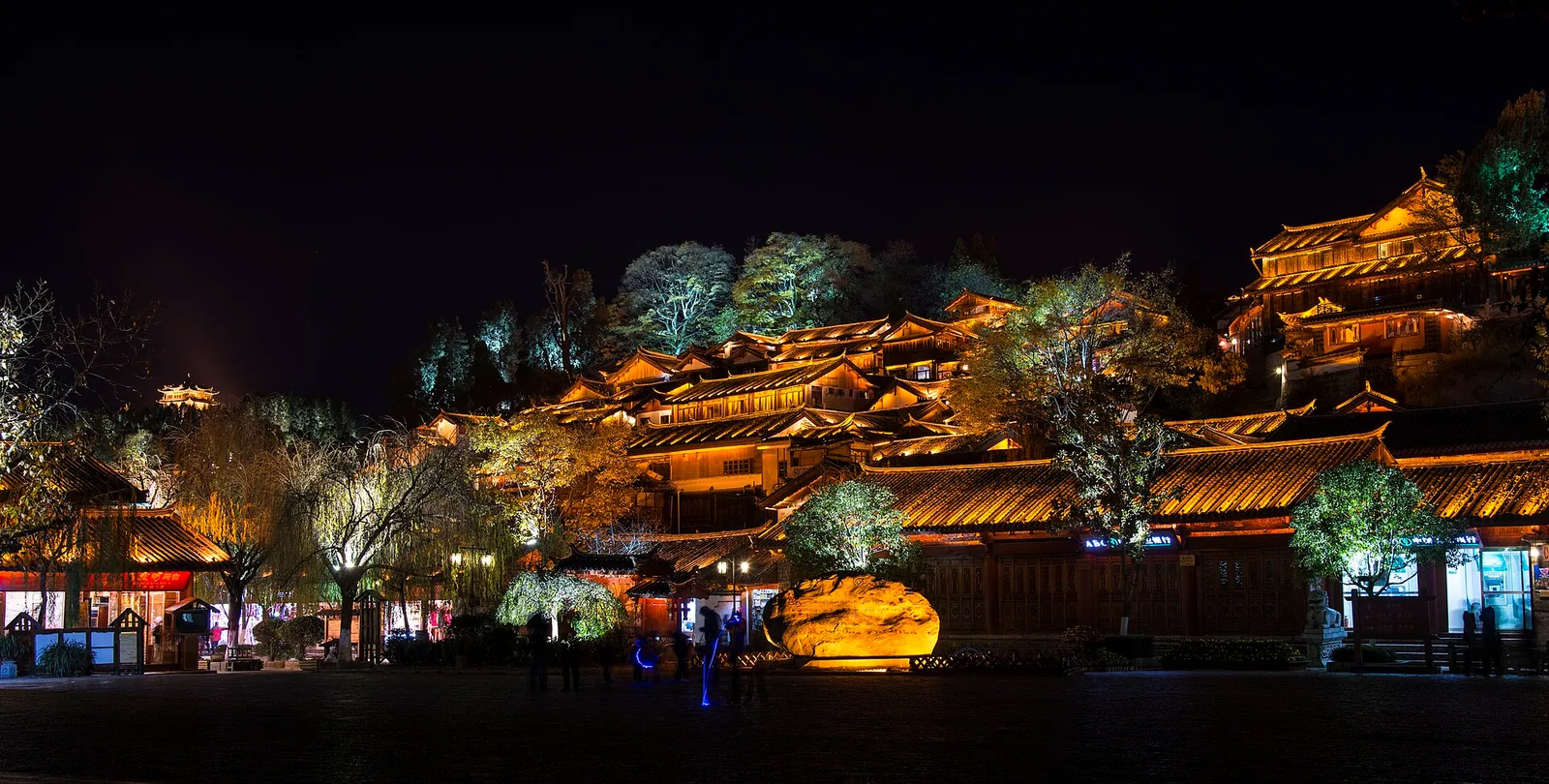
Lijiang is the most photographed town in Yunnan and one of the most heavily touristed. The UNESCO-listed old town is genuinely lovely at dawn — canals, willow trees, tiled roofs, and the snow line of Jade Dragon Mountain in the distance — but by mid-morning it fills with tour groups, and by evening the bars are loud. The solution is not to skip Lijiang but to use it as a base and to spend your time at its edges.
Reading the old town correctly
The old town is a maze of lanes, canals, and bridges, built by the Naxi people over centuries. It is at its best before 9 a.m., when the shop shutters are still down and the water channels are the loudest thing you can hear. Walk uphill to the Lion Hill viewpoint for orientation, then come back down and get deliberately lost in the quieter northern lanes.
The Naxi are a distinct ethnic group with their own Dongba script, music, and religious traditions. You will see the script on souvenirs; you will understand more by visiting the Dongba Culture Museum or by spending time in a village outside the tourist core. The old town is a stage; the villages are the household.
- Old town at dawn, before the shops open
- Lion Hill for a roofscape view and orientation
- Dongba Culture Museum for Naxi history and script
- Baisha and Shuhe villages for a less staged version of the region
What to do beyond the postcard
Baisha is a short bus or taxi ride north of Lijiang and has a slower pace, a famous set of Ming-era murals, and good views of the mountain. Shuhe is closer and more commercial but still pleasant early in the day. Further afield, the road to Tiger Leaping Gorge and Shangri-La passes through landscapes that are the real reason to come to this corner of Yunnan.
Jade Dragon Snow Mountain is the headline excursion. It is expensive, crowded, and weather-dependent; the cable car goes to about 4,500 metres, where altitude can hit unprepared visitors. If you go, book in advance, bring layers, and do not schedule it for your first day at altitude. The mountain is also visible from Lijiang on clear mornings, which may be enough.
- Baisha's murals and village lanes
- Shuhe at opening, before the day trippers
- Jade Dragon Snow Mountain only if the forecast is clear
- A day trip toward Tiger Leaping Gorge, even if you do not hike
Timing and the tourist economy
Lijiang's altitude is 2,400 metres, high enough that some visitors feel mild breathlessness on stairs. Take the first day slowly, drink water, and avoid alcohol. The town is cold at night for much of the year; heating is not always as robust as it looks in the photos.
The tourist economy is intense. Restaurant menus have photo translations and prices to match; the same dish is cheaper a few lanes away. This is not a reason to be cynical, but it is a reason to walk ten minutes before choosing. The old town is best treated as a place to sleep and eat, with your real days spent outside it.
Highlights
- 01The old town's canals and lanes before the crowds
- 02Naxi Dongba culture and music
- 03Baisha village and its Ming murals
- 04Clear-morning views of Jade Dragon Snow Mountain
Getting there
- High-speed rail from Kunming to Lijiang takes about 3–3.5 hours; the station is a short taxi ride from the old town.
- Flights connect Lijiang with Kunming, Chengdu, Chongqing, and other Chinese cities.
- Buses and private cars run north to Baisha, Tiger Leaping Gorge, and Shangri-La.
Where to stay
Inside the old town for atmosphere (expect noise and luggage-cart logistics); Shuhe or Baisha for a quieter base with easier parking.
Honest notes
The old town is extremely commercial after 10 a.m. and loud at night.
Jade Dragon Snow Mountain is often cloud-covered; do not build your trip around it.
Luggage cannot easily be wheeled through the old town's cobbled lanes — arrange a porter or pack light.
Best for
- + Travelers using Lijiang as a base for the northwest
- + Anyone interested in Naxi culture and mountain scenery
- + Photographers willing to get up before sunrise
Not for
- − Travelers seeking an untouched historic town
- − People sensitive to altitude or cold nights