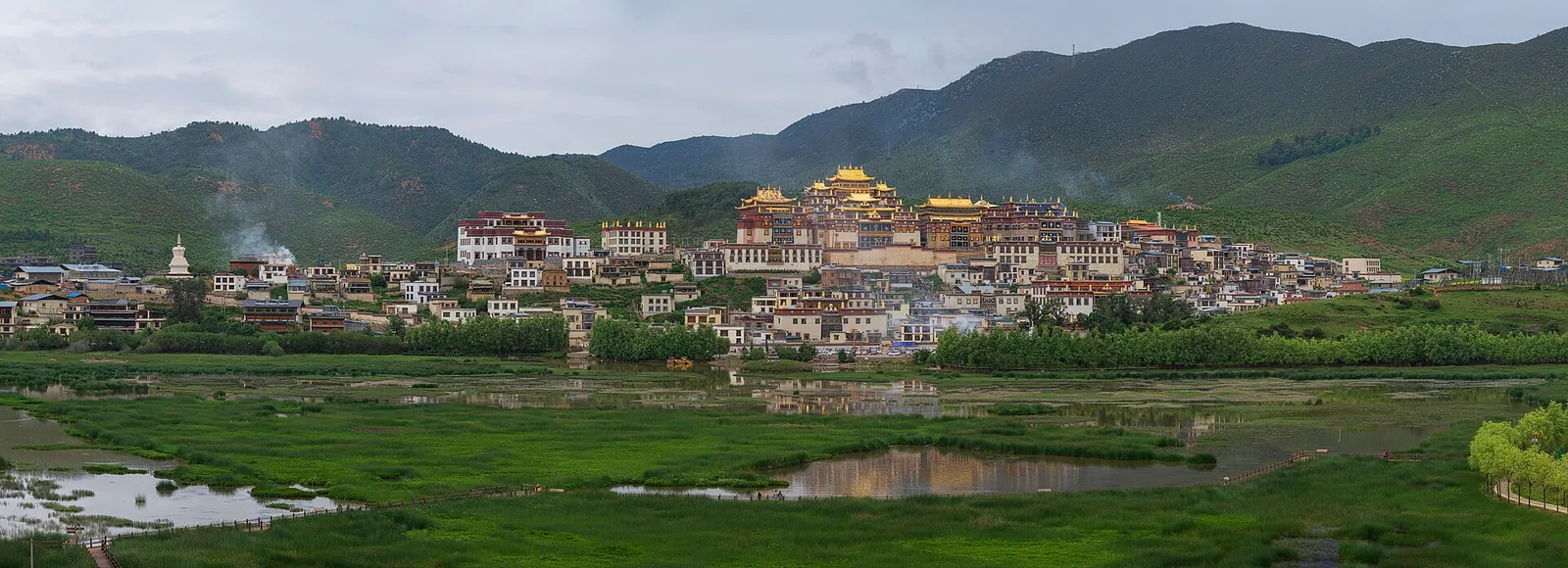
The name was invented by a novelist, but the place is real: a Tibetan plateau town at 3,160 metres, surrounded by barley fields, pine forest, and the red-and-gold roofs of Songzanlin Monastery. Shangri-La is the point where Yunnan stops feeling subtropical and starts feeling like the eastern edge of the Himalayas. It is also where many itineraries go wrong, because visitors arrive directly from Lijiang and treat altitude as a detail.
What the town actually is
The modern town is functional and a bit scruffy; the old town, Dukezong, was badly damaged by fire in 2014 and rebuilt in a polished, somewhat theme-park style. Do not come for the old town. Come for the monastery, the plateau light, the Tibetan food, and the access to higher country — Balagezong, Pudacuo National Park, and the road toward Deqin and Meili Snow Mountain.
Songzanlin is the largest Tibetan Buddhist monastery in Yunnan, a sprawling complex of halls and monks' quarters on a hillside north of town. Visit in the morning when the pilgrims and monks are active, walk slowly, and respect the photography rules inside the halls. The monastery is an active religious site, not a museum.
- Songzanlin Monastery in the morning
- Pudacuo National Park's alpine lakes and forest
- Dukezong's prayer wheel and rebuilt old town, with tempered expectations
- Tibetan meals: yak, barley, butter tea, and mushrooms
Altitude, weather, and pace
At 3,160 metres, mild headaches, poor sleep, and breathlessness on stairs are common. The first day should be gentle: no long hikes, no alcohol, plenty of water, and an early night. If you have come from Lijiang by road, take the journey slowly and stop at the gorge; if you flew in, give yourself even more time. People with heart or lung conditions should talk to a doctor before coming.
The weather is continental and sudden. Mornings are cold even in summer, afternoons can be warm and bright, and rain or hail can arrive without much warning. Bring a warm mid-layer, a waterproof shell, sun protection, and lip balm. Winter is cold and clear; summer is green and wet. The shoulder months of May–June and September–October are the most comfortable.
- First day: short walk, monastery, early dinner, early bed
- Do not schedule a high-altitude hike for arrival day
- Carry water and snacks; shops are sparse outside town
The plateau beyond town
Pudacuo is the most accessible taste of highland scenery: lakes, yak meadows, and spruce forest, with shuttle buses and boardwalks. Balagezong is more dramatic and less busy, a deep gorge with a river and Tibetan villages. Both are day trips from town. Further north, the road to Deqin climbs over passes above 4,000 metres and reaches Meili Snow Mountain, one of the most spectacular views in China when the weather cooperates.
This is also a place to adjust your expectations of 'sightseeing'. The best moments are often roadside: a herd of yaks crossing, a family harvesting barley, a monastery courtyard in the rain. Build slack into the schedule. A tight itinerary and high altitude are a bad combination.
Highlights
- 01Songzanlin Monastery's morning atmosphere
- 02Pudacuo's alpine lakes and yak meadows
- 03Balagezong gorge
- 04The road north toward Deqin and Meili Snow Mountain
Getting there
- Buses from Lijiang take about 3.5–4 hours; private cars are faster and allow stops at Tiger Leaping Gorge.
- Shangri-La Diqing Airport (DIG) has flights from Kunming and other Chinese cities; the airport is 15 minutes from town.
- High-speed rail does not yet reach Shangri-La; the railway is under construction.
Where to stay
The modern town centre for convenience and warmth; Dukezong for atmosphere if you accept the rebuilt character.
Honest notes
The rebuilt old town is not historic in the way visitors often expect.
Altitude sickness is a real possibility; do not plan a tight schedule for the first 24 hours.
Many guesthouses do not have reliable heating in winter — check before booking.
Best for
- + Travelers heading toward Tibetan culture and high mountain landscapes
- + People willing to slow down for a day to acclimatise
- + Photographers chasing plateau light and monastery mornings
Not for
- − Travelers with limited time who cannot afford a slow first day
- − Anyone with untreated heart or lung conditions