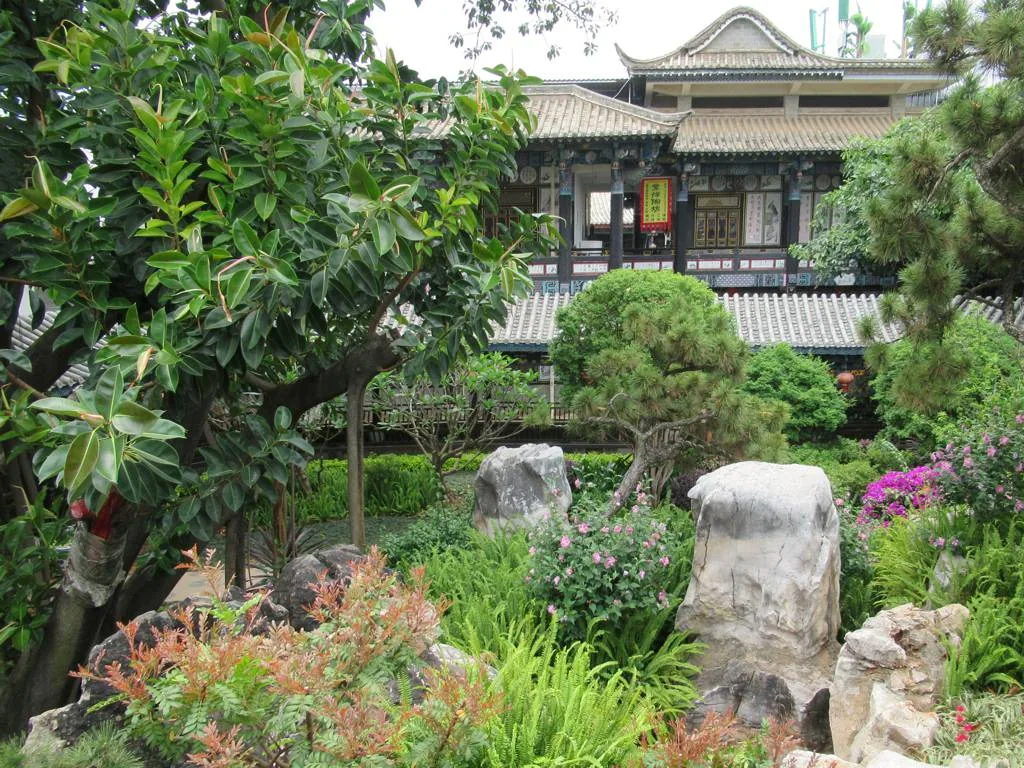
Jianshui was an administrative and cultural centre on the road south from Kunming, and its old town retains a coherence that the bigger tourist towns have lost. The Confucian temple is one of the largest in China; the Zhu family garden is a maze of courtyards; the old exam hall gives a sense of how imperial China selected its officials. Between the sights, people live ordinary lives in the lanes.
Temples, gardens, and exam halls
The Confucian temple anchors the old town, with a large pond, stone bridges, and halls that reward a slow walk. The Zhu Garden is a dense sequence of courtyards, pavilions, and water features built by a wealthy family; it is easy to spend an hour there. The exam hall is a reminder that this small town was once a serious academic centre.
The old town's streets are lined with wooden shopfronts, many of them selling the same famous tofu. Jianshui tofu is grilled over charcoal and served with a dipping sauce; it is worth seeking out at a local shop rather than a tourist restaurant. The town is also known for purple pottery, which makes a better souvenir than the usual airport trinkets.
- Confucian Temple and its pond
- Zhu Family Garden
- The imperial exam hall
- Charcoal-grilled Jianshui tofu and purple pottery
A day and a night
Most travelers visit Jianshui as a day trip from Kunming or as a stop between Kunming and Yuanyang. That is enough for the main sights, but an overnight lets you see the old town after the day groups leave and before they arrive. The evening light on the old gates and the morning market are both worth the extra night.
The town is compact and walkable. A bicycle is useful for the older bridges and the lake outside the centre. The famous Double Dragon Bridge is a short ride from town and best photographed in the late afternoon.
- Stay overnight for the old town's quiet hours
- Rent a bicycle for the Double Dragon Bridge
- Try the tofu at a local shop, not a hotel restaurant
Why it matters
Jianshui is a useful counterweight to the idea that Yunnan's history is all ethnic minorities and mountain trade. This was a Han administrative town with a Confucian academy, and its architecture reflects a different strand of the province's identity. The mix is what makes Yunnan interesting: frontier, empire, trade, and multiple local cultures in the same landscape.
It also offers something increasingly rare in Yunnan: a historic town where the tourist economy has not swallowed the everyday one. Go before that changes.
Highlights
- 01The Confucian Temple complex
- 02Zhu Family Garden's courtyards
- 03Jianshui tofu and purple pottery
- 04The Double Dragon Bridge
Getting there
- High-speed rail from Kunming to Jianshui takes about 1.5–2 hours; the station is a short taxi ride from the old town.
- Buses connect Jianshui with Yuanyang and other towns in southern Yunnan.
- The old town is walkable; bicycles are useful for the surrounding sights.
Where to stay
Inside or just outside the old town for walkability; the new town for cheaper hotels.
Honest notes
Some temples charge separate tickets; check before you commit.
The old town is quiet at night, with limited dining options.
Day-trippers fill the main sights between 10 a.m. and 3 p.m.
Best for
- + Travelers interested in Chinese history and architecture
- + Food lovers who want a local specialty
- + People looking for a less crowded historic town
Not for
- − Travelers seeking dramatic mountain scenery
- − Anyone wanting nightlife
Routes through here