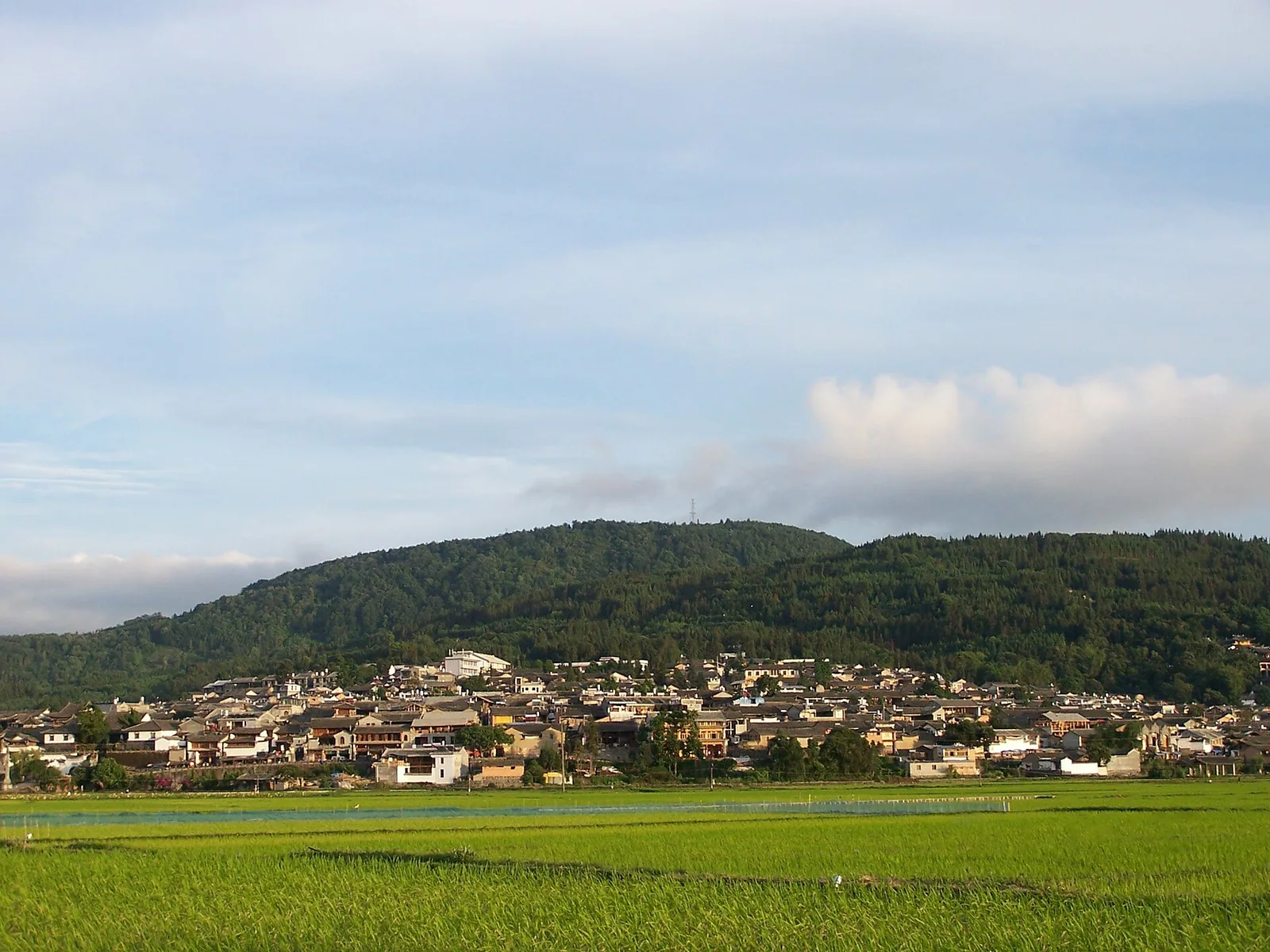
Tengchong sits in a volcanic basin in western Yunnan, close to the Myanmar border. It is known for hot springs, a dormant volcanic field, the old town of Heshun, and the Burma Road — the supply route built during the Second World War. The combination is unusual: geology, migrant architecture, and a frontier history that Chinese travelers know well and foreign visitors often miss.
Volcanoes, springs, and forest
The Tengchong volcanic field has several cones and craters that can be visited, including a walk around the rim of one crater and a cable car up another. The hot springs are the bigger draw: from developed resort pools to simple riverside baths. The geothermal activity is genuine, and the smell of sulphur is part of the experience.
The Gaoligong mountains rise to the east and west, with forest trails and biodiversity that rival better-known parks. Some areas are protected reserves; access is limited and should be arranged with local guides. The combination of volcanic landscape and subtropical forest is rare in China.
- Volcanic crater walks and viewpoints
- Hot springs, from resort pools to local baths
- Gaoligong forest trails with a local guide
- Heshun old town's migrant architecture
Heshun and the Burma Road
Heshun is a village of stone lanes, ancestral halls, and libraries built by merchants who made their fortunes in Burma. It is quieter and more residential than the big tourist towns, though it has become popular with domestic visitors. The architecture mixes Yunnan timber with Southeast Asian and colonial influences, a reminder that this border region has always looked both ways.
The Burma Road and the wartime air route over the Hump are central to Tengchong's modern history. The memorial museums are worth a visit if you want context for the landscape. This is also a border area; travel to Myanmar requires proper documents and is not a casual excursion.
- Heshun's lanes and ancestral halls
- War memorial museums for the Burma Road context
- Local markets and border-town food
Practical notes
Tengchong has an airport and is connected by road to Baoshan and Dali. The town is compact, but the sights are spread out; a car or driver makes the day much easier. The climate is mild, with a rainy season from May to October. Winter is cool and clear, good for hot springs.
Tourism is growing, especially among domestic visitors, but English is limited. Bring a translation app, be patient with transport, and do not expect the polish of Lijiang. The reward is a part of Yunnan that feels less like a stage set and more like a working border town.
Highlights
- 01Volcanic craters and hot springs
- 02Heshun old town
- 03Gaoligong forest and biodiversity
- 04Burma Road history
Getting there
- Tengchong Tuofeng Airport (TCZ) has flights from Kunming and other Chinese cities.
- Buses and private cars connect Tengchong with Baoshan and Dali; the road journey is long but scenic.
- Local transport to the volcanoes and Heshun is best arranged by car.
Where to stay
Heshun for atmosphere; Tengchong town for convenience and hot-spring hotels.
Honest notes
Sights are spread out; without a car, you will spend a lot of time waiting.
Some hot-spring resorts are expensive and crowded on weekends.
The border is close but not casually crossable.
Best for
- + Travelers interested in geology and hot springs
- + History-minded visitors curious about the Burma Road
- + People who want a less polished, more local Yunnan
Not for
- − Travelers without patience for scattered transport
- − Anyone expecting English-language tourism infrastructure
Routes through here