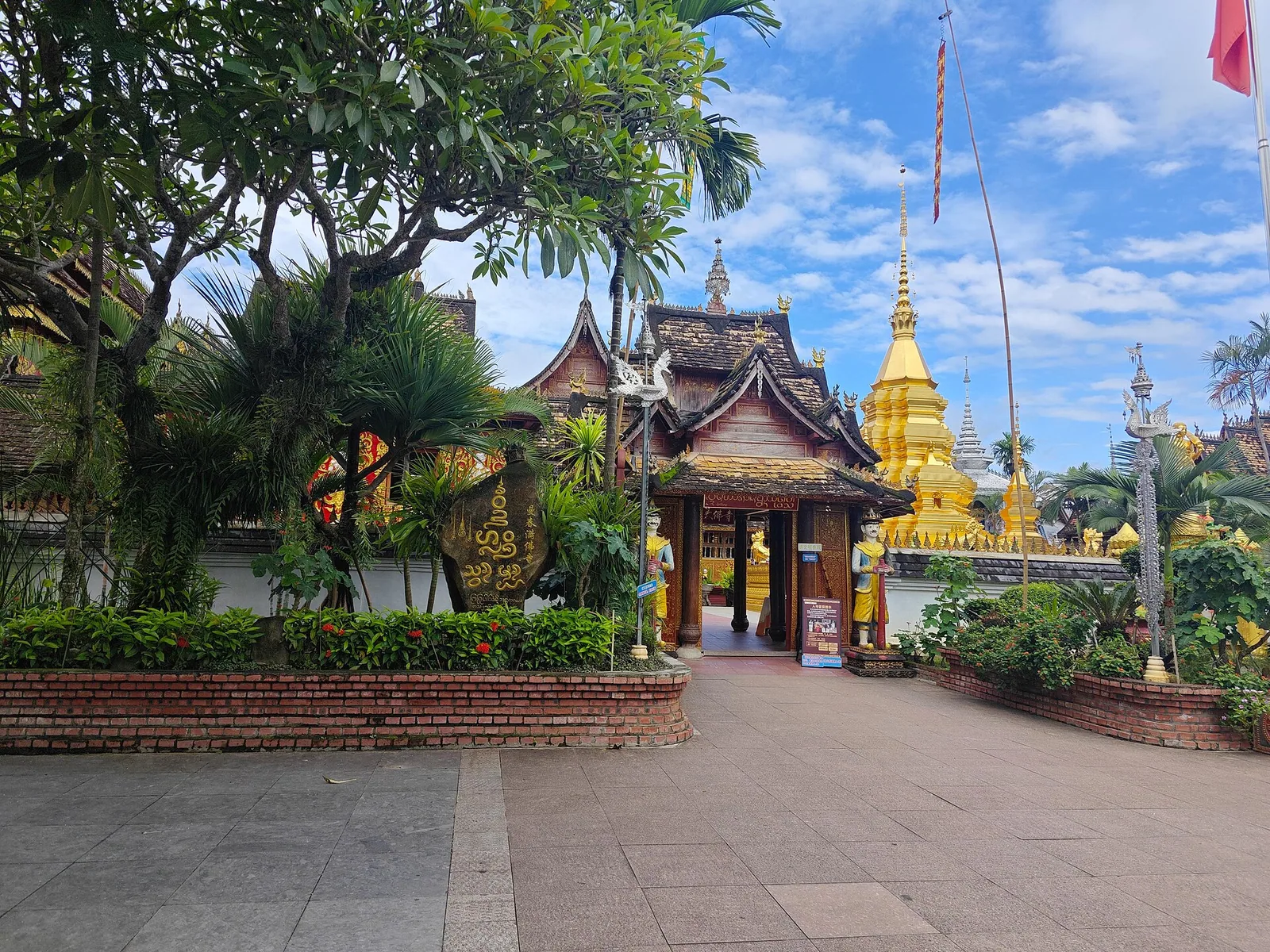
Xishuangbanna is the southern edge of Yunnan, bordering Laos and Myanmar. The climate is tropical, the vegetation is dense, and the culture is strongly Dai — Theravada Buddhist temples, stilt houses, and a food culture built on herbs, lime, chilli, and grilled fish. Jinghong is the main city and the usual base. The contrast with Lijiang or Shangri-La is so complete that it can feel like a separate trip, which is exactly why it works.
Jinghong and the Dai landscape
Jinghong is a mid-sized city on the Mekong (Lancang) River, with a tropical pace and a surprising amount of new development. The night market along the river is the social centre: grilled fish, tropical fruit, Dai noodles, and sweets. The city's temples are active places of worship; dress modestly and remove your shoes where required.
Outside the city, the landscape opens into rubber plantations, rice fields, and rainforest. Ganlanba (Mengla) is a common day trip for Dai villages and boat trips. The botanical garden at Menglun is a serious research institution with an enormous collection of tropical plants, and it is a good place to understand the region's biodiversity.
- Jinghong's riverside night market
- Dai temples and morning alms processions
- Menglun Botanical Garden
- Ganlanba's Dai villages and river trips
Rainforest, heat, and timing
The best months are November–April, when the rain is lighter and the humidity is more manageable. March and April can be hot and smoky from agricultural burning; May–October is the wet season, with heavy afternoon downpours, lush growth, and fewer tourists. The tropics are not a place for a tight schedule; build in a midday rest and do your walking in the morning and late afternoon.
The border is close, but border crossings for foreigners are regulated and should not be attempted casually. If you want to continue to Laos, use an official crossing and check visa requirements in advance. Do not rely on local guides to arrange undocumented shortcuts.
- November–April is the most comfortable window
- Carry rain protection even in the dry season
- Use insect repellent; dengue is a seasonal concern
A different Yunnan
Xishuangbanna is a useful corrective to the idea that Yunnan is all mountains and ancient towns. Here the culture is Southeast Asian, the food is bright and herbal, and the forest is the main attraction. It pairs well with a route that starts in Kunming and moves south by high-speed rail, or with a longer trip that continues into Laos.
The tourist infrastructure is uneven outside Jinghong. Some rainforest parks are heavily commercial; others are quiet and beautiful. Ask locally, choose smaller operators, and be sceptical of 'ethnic village' attractions that stage culture for buses. The real Dai villages are easy to find if you travel a little further.
Highlights
- 01Dai temples and monk processions in Jinghong
- 02The riverside night market
- 03Menglun Botanical Garden's tropical collection
- 04Rainforest walks and Dai village food
Getting there
- High-speed rail from Kunming to Xishuangbanna takes about 3–4 hours; the station is a short taxi ride from Jinghong.
- Xishuangbanna Gasa International Airport (JHG) has flights from Kunming and other Chinese cities.
- Buses and private cars connect Jinghong with Ganlanba, Menglun, and the border areas.
Where to stay
Jinghong for convenience and food; Ganlanba or the outskirts for a quieter, greener stay.
Honest notes
March–April can be hot and hazy from burning; check air quality if you are sensitive.
Some rainforest parks are more theme park than forest.
Border areas require proper documents; do not join informal crossings.
Best for
- + Travelers who want a tropical contrast to the mountains
- + Food lovers interested in Dai cuisine
- + Families with children who enjoy plants and markets
Not for
- − Travelers who dislike heat and humidity
- − People with limited time who cannot handle the extra distance
Routes through here