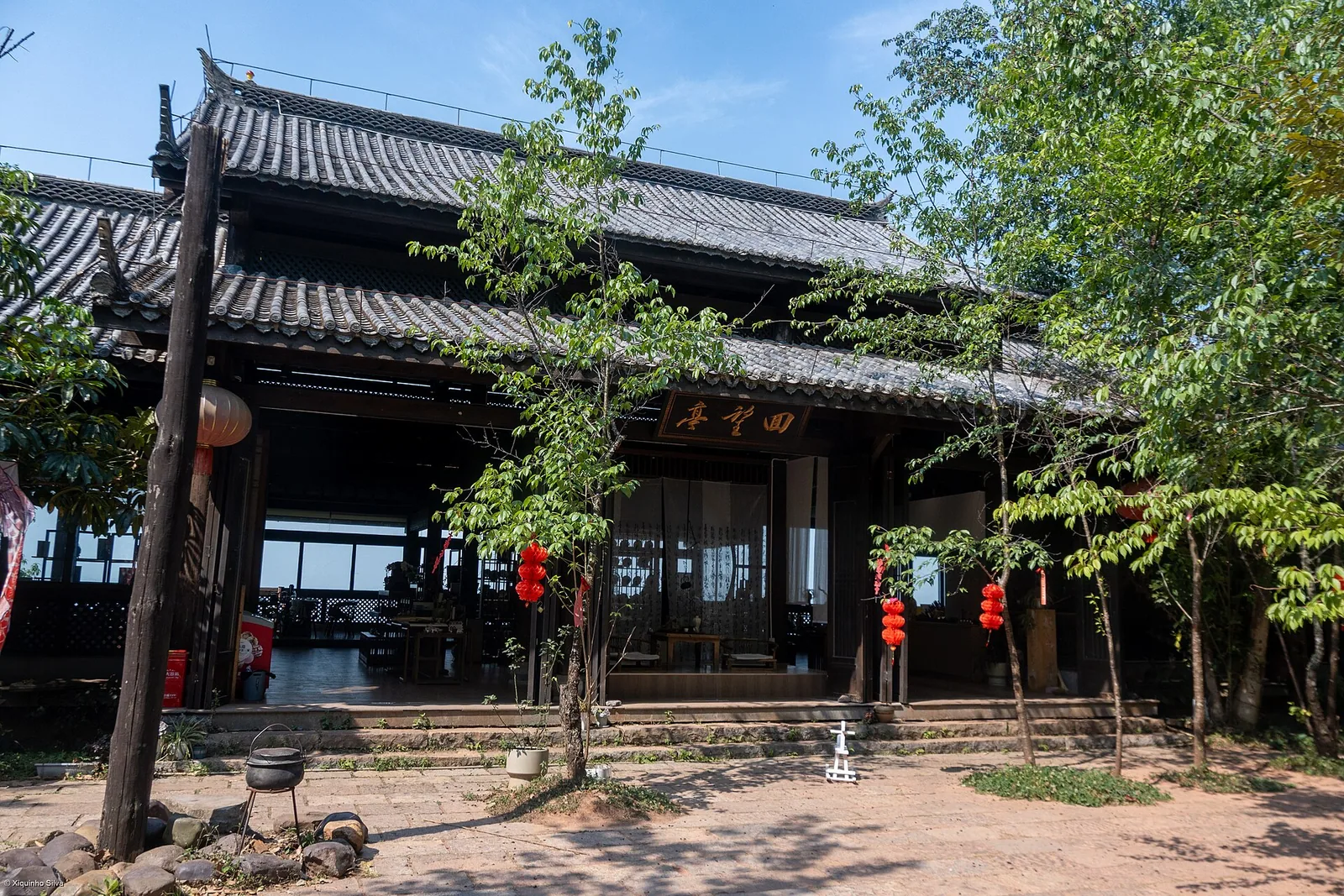
Yunnan's historic towns were not built for tourists. They were built at river crossings, passes, and market points on caravan routes that connected southwest China to Tibet, India, and Southeast Asia. The tea-horse road is the most famous, but salt, grain, and people moved along many paths. Understanding this helps explain why a small town has a large temple or why a village sits halfway up a mountain.
Tea for horses
The tea-horse road carried pressed pu'er tea north into Tibet and brought horses south into China. Caravans moved in stages, using inns, markets, and bridges that still exist in places like Shaxi. The trade shaped local economies and architecture: wider courtyards for pack animals, stables at the back of inns, and market squares designed for loading and unloading.
The tea was compressed into cakes for transport, which is one reason pu'er is still sold in that form. The routes declined with modern roads, but many towns retain the layout of a caravan stop.
- Shaxi's market square and old inns
- Pressed tea cakes as a transport technology
- Bridges and passes that still carry local traffic
Salt, borders, and migration
Salt was another key commodity, and salt wells shaped settlement patterns. Border towns traded with Myanmar, Laos, and Vietnam, bringing goods, languages, and architectural influences. Migrant merchants built temples and libraries in their home towns, which is why a village in Tengchong can have a surprisingly grand hall.
Migration also went the other way. Yunnan's ethnic diversity is the result of centuries of movement, trade, and intermarriage. The province's culture is not a set of isolated traditions; it is a history of exchange.
Seeing the roads today
You can still walk sections of old caravan routes, especially around Shaxi, and see the stone-paved paths, bridges, and inns. Some are marked; others are local knowledge. Ask at a guesthouse or hire a local guide.
Do not expect a continuous trail. Modern roads have replaced much of the route, and some sections are on private land. The value is in the fragments: a bridge, a courtyard, a market square where the same goods are still sold.